Scientific poster prepared by Joseph Lupien-Meilleur, PhD student under the supervision of Denis Roy.
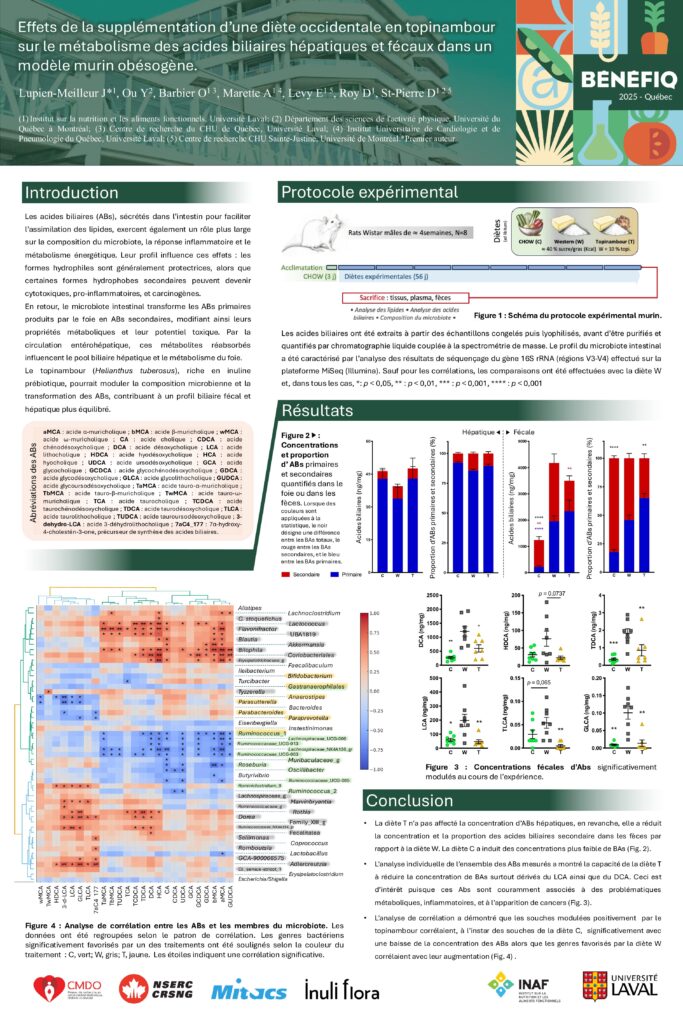
Bile acids (BAs), secreted into the intestine to facilitate lipid absorption, also play broader roles in shaping the gut microbiota, modulating inflammatory responses, and regulating energy metabolism. These effects depend on their profile: hydrophilic forms are generally protective, whereas certain secondary hydrophobic forms can become cytotoxic, pro-inflammatory, and carcinogenic. In turn, the gut microbiota transforms primary BAs produced by the liver into secondary BAs, thereby altering their metabolic properties and toxic potential. Through enterohepatic circulation, these reabsorbed metabolites influence the hepatic bile acid pool and liver metabolism. Jerusalem artichoke (Helianthus tuberosus), rich in prebiotic inulin, may modulate microbial composition and bile acid transformation, contributing to a more balanced fecal and hepatic bile acid profile.
To learn more about the research that inspired this poster:
joseph.lupien-meilleur.1@ulaval.ca
For companies interested in learning more:
ssi@inaf.ulaval.ca